Source Full Automatic Sanitary Napkin Machine for Household, Sanitary, and Finishing Uses
Compare 30 Full Automatic Sanitary Napkin Machine options with varying speeds and specifications. Buyers can evaluate models like JS-WJ-A and JWC-KBD for household, sanitary, and finishing processes with features such as automatic grading and CE certification.
Key considerations
Products List


High-Quality Sanitary Napkin Machine for Sale Sanitary Pad Machine
$450000.00 - $750000.00
MOQ: 1 Sets


Full Automatic Women Sanitary Napkin Machine for Efficient Packaging Equipment
$55000.00 - $60000.00
MOQ: 1 Sets

Full New Design Sanitary Napkin Packaging Machine with High-Speed Performance
$55000.00 - $60000.00
MOQ: 1 Sets


$295000.00 - $465000.00
MOQ: 1 set


Factory Price Full Automatic Fast-Easy Package Sanitary Napkin Making Machine
$300000.00 - $325000.00
MOQ: 1 Pieces


Full Automatic Sanitary Napkin Machine Stable Work Easy Operation with CE
$350000.00 - $500000.00
MOQ: 1 Sets

High Standard Automatic Sanitary Napkin Making Machine with CE ISO9001
$350000.00 - $500000.00
MOQ: 1 Sets
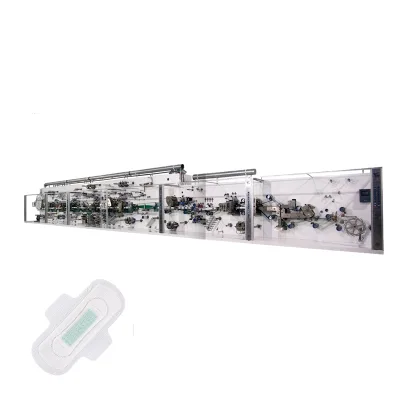

$220000.00 - $250000.00
MOQ: 1 pieces

Eco Fully Automatic Sanitary Pad Making Machine Lady Sanitary Napkin Making Machine
$89999.00 - $299999.00
MOQ: 1 Pieces
Comprehensive Sourcing Guide
Full Automatic Sanitary Napkin Machine Sourcing Guide
Procuring a Full Automatic Sanitary Napkin Machine requires a disciplined approach to aligning technical capabilities with production volume and quality standards. These machines are engineered to automate the entire manufacturing workflow, from raw material pulping to the final packaging of finished hygiene products. Buyers must recognize that "full automatic" implies a high degree of integration, where processes such as pulping, forming, laminating, and finishing are coordinated without manual intervention at each stage. This level of automation significantly reduces labor costs and minimizes human error, but it also demands rigorous verification of machine stability, speed consistency, and after-sales support infrastructure.
The sourcing landscape for these industrial assets is characterized by a wide variance in specifications, pricing, and operational conditions. Listings often reveal a broad spectrum of capabilities, ranging from entry-level configurations to high-speed industrial lines. Buyers should not assume that all listed machines offer identical performance or compliance levels. Instead, the procurement strategy must focus on filtering listings based on concrete technical data, such as real running speeds, power requirements, and physical dimensions. Understanding the specific operational needs of your facility is the first step in navigating this complex market and identifying suppliers who can deliver reliable, long-term value.
Product Scope and Observed Listing Signals
The observed market data indicates a significant diversity in machine configurations and operational states. Listings show a price range extending from approximately $3,000 to $8,000,000, reflecting the vast difference between basic auxiliary units and complete, high-capacity production lines. Furthermore, the condition of the machinery varies, with some listings explicitly describing units as "New" while others are marked as "Used." This distinction is critical for budget planning and risk assessment, as used equipment may offer lower upfront costs but requires thorough inspection of wear and tear, particularly in high-stress components like motors and cutting blades.
Speed and productivity metrics are key differentiators among the available options. Observed real running speeds vary considerably, with some machines operating at less than 350 pieces per minute, while others achieve speeds between 400-500 pieces per minute or even 500-600 pieces per minute. These variations directly impact your potential output and must be matched against your sales forecasts. Additionally, the physical footprint and packing standards differ, with some units requiring specific wooden packing or case sizes, and others adhering to standard volume metrics like 6 CBM. Buyers must carefully review these logistical details to ensure their facility can accommodate the machine’s dimensions and that shipping costs are accurately calculated.
Technical Specifications to Verify
When evaluating technical specifications, the focus should be on the core processing capabilities and power requirements. The supply chain includes machines dedicated to specific stages of production, such as pulping, laminating, and finishing processes. It is essential to verify whether the machine you are considering is a standalone unit for a specific process or a complete line. For instance, some listings identify the usage specifically as a "Sanitary Napkin Machine" or "Household Paper Machine," while others describe the process as "Paper Machine" or "Finishing Process Machine." Clarifying the exact scope of the equipment prevents purchasing gaps in your production line.
Power and electrical compatibility are non-negotiable verification points. Observed input power ratings include 3kw, and operating voltages vary, with some machines requiring 220V and others needing 380V/50Hz. Buyers must ensure that their facility’s electrical infrastructure can support the specific voltage and amperage requirements of the selected machine. Additionally, the machine direction and productivity rates, such as 450PCS/Min, should be cross-referenced with your target output. The model numbers, such as JS-WJ-A, JS-DP, or JWC-KBD series, often correlate with specific capabilities, so understanding the nomenclature can help in comparing similar units across different suppliers.
Compliance and Safety Documentation
Certification status is a primary indicator of a machine’s adherence to international safety and quality standards. The most frequently observed certifications in the market are CE and ISO, with some listings explicitly stating compliance with ISO9001 and CE standards. The CE mark is particularly important for buyers in regions that require conformity with European health, safety, and environmental protection standards. However, buyers should not rely solely on the presence of a certification label; they must request valid certificates from recognized bodies to verify that the machine has undergone proper testing and meets current regulatory requirements.
Beyond certifications, documentation regarding the machine’s origin and standardization provides additional context for compliance. Many machines originate from Dongguan, Guangdong Province, or more broadly from China, which is a major hub for paper machinery manufacturing. Buyers should verify that the machine’s design and construction adhere to the stated standards, such as the 6 CBM volume standard or specific pad size standards like 280x155mm. Ensuring that the machine’s technical documentation is available in English and includes detailed safety manuals, wiring diagrams, and maintenance schedules is crucial for safe operation and regulatory audits in your home country.
Cost Drivers and Commercial Terms
The cost of a Full Automatic Sanitary Napkin Machine is influenced by several factors, including automation level, speed, and condition. The observed price range of $3,000 to $8,000,000 suggests that basic or used units are significantly cheaper than new, high-speed, fully integrated lines. Buyers should analyze the cost per unit of output to determine the true value of a machine. A higher-priced machine with a speed of 500-600PCS/min may offer a better return on investment than a cheaper unit with a speed of less than 350PCS/min, depending on your production volume and labor costs.
Commercial terms, including minimum order quantities (MOQ) and delivery times, also play a significant role in the procurement decision. The observed MOQ is consistently 1, indicating that suppliers are generally willing to sell single units, which is typical for heavy machinery. However, delivery dates can vary, with some suppliers offering a delivery date of 20 days after payment. Buyers must clarify whether this timeline includes manufacturing, testing, and shipping, or if it refers only to the production phase. Additionally, the packing method, such as wooden packing or wooden cases, can impact shipping costs and insurance premiums, so these details should be negotiated clearly in the contract.
Supplier Qualification and Quality Control
Supplier qualification is critical when sourcing complex industrial machinery. Buyers should prioritize suppliers who provide comprehensive after-sales services, such as video technical support and field maintenance and repair services. These services are essential for minimizing downtime and ensuring that any technical issues are resolved quickly. The presence of computerized controls, as noted in some listings, suggests a higher level of technological sophistication, which often correlates with better supplier support capabilities. Buyers should inquire about the supplier’s experience in installing and maintaining similar machines in your region.
Quality control measures should be established before finalizing any purchase. This includes verifying the machine’s condition, whether new or used, and inspecting key components such as the motor, cutting mechanism, and control panel. For used machines, a detailed inspection report or a third-party verification service is highly recommended. Buyers should also check the supplier’s reputation and history in the industry. While specific supplier names should not be referenced, the general quality of suppliers can be gauged by the clarity of their technical documentation, the responsiveness of their sales team, and the transparency of their pricing and terms.
Long-Term Procurement Checks
Long-term procurement success depends on the availability of spare parts and the supplier’s commitment to ongoing support. Buyers should confirm the availability of critical spare parts, such as blades, rollers, and electronic components, and establish a supply chain for these items. The efficiency of the machine, often cited around 90% or 98% in listings, should be monitored over time to ensure it does not degrade due to wear or lack of maintenance. Regular performance audits can help identify potential issues before they lead to costly production stoppages.
Additionally, buyers should consider the adaptability of the machine to future needs. Some listings indicate that customization is available, which can be a valuable feature if your product specifications change. The ability to adjust pad sizes, such as 255*155mm or other customized dimensions, allows for greater flexibility in your product line. Buyers should also evaluate the machine’s energy efficiency and environmental impact, as these factors can influence operational costs and regulatory compliance in the long run. By focusing on these long-term aspects, buyers can ensure that their investment in a Full Automatic Sanitary Napkin Machine remains viable and profitable for years to come.
FAQs
What is the real running speed of the machine?
The real running speed varies between 350 and 600 pieces per minute depending on the specific model selected. Some units operate at less than 350 pieces per minute while others reach up to 600 pieces per minute for higher productivity needs.
Can the machine be customized for specific needs?
Yes, customization is available for this automatic grade machine to meet specific production requirements. Buyers can request tailored specifications while ensuring the product remains in new condition or meets used standards as listed.
What certifications does the machine hold?
The machine holds CE and ISO certifications to ensure compliance with international safety and quality standards. These certifications are verified attributes for the automatic sanitary napkin machine models available from the supplier.
How long is the delivery time after payment?
The delivery date is typically 20 days after payment is received for the standard models. This lead time applies to the automatic grade machines originating from Dongguan, Guangdong Province, China.
What is the packaging method for the machine?
The machine is packed in wooden boxes, wooden cases, or wooden cotton packaging for safe transport. This ensures the equipment remains secure during shipping from the origin in China to the destination.
What is the input power and voltage requirement?
The input power is 3kw with an operating voltage of 220V or 380V at 50Hz depending on the model. These electrical specifications support the automatic processing technology used in the sanitary napkin production line.